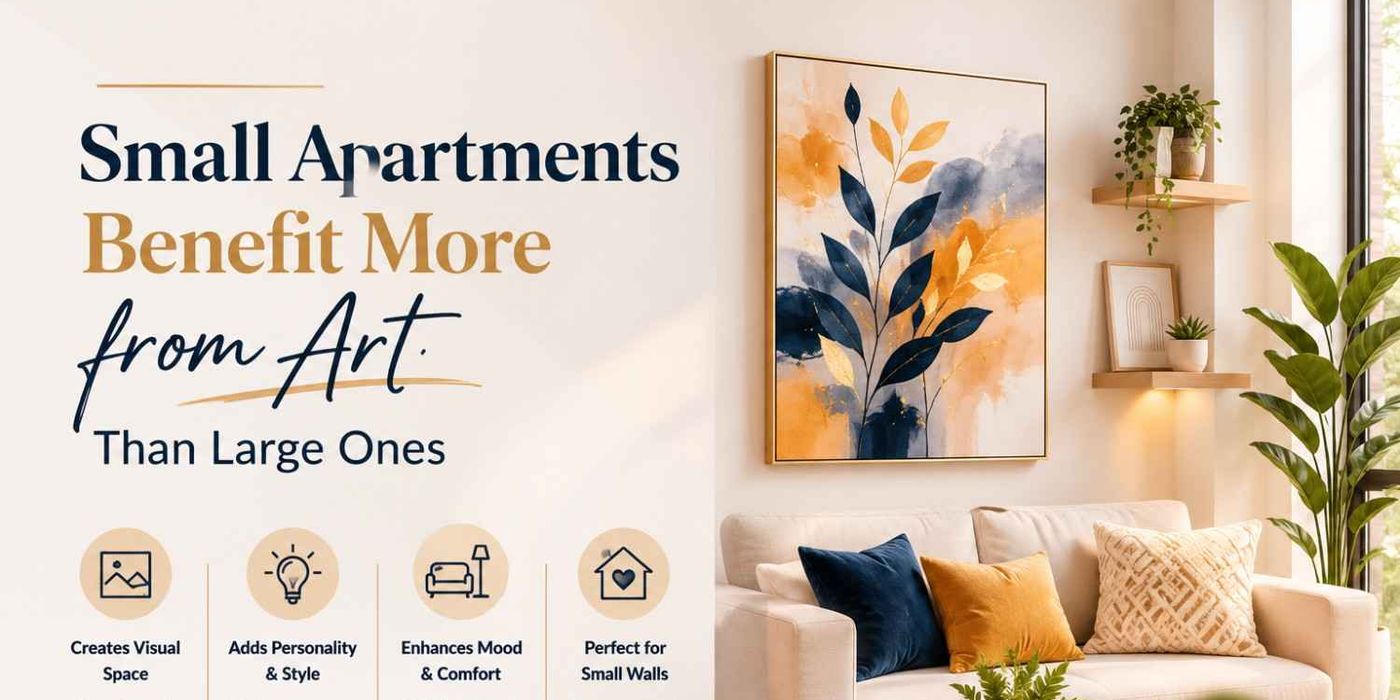
How to Decorate a Small Apartment with Art-
You finally have your own apartment. The walls are bare, the space is tight and every time you try to hang something, it feels off. Too big, too small, too random.
Shop related designs: Abstract Colorful Running Horse Canvas, Urban Energy Abstract Wall Canvas and Abstract Black & White Watercolor Yin Yang Canvas Art.
Here's the truth interior designers know: small apartments don't need less art they need smarter art. The right painting in the right spot can make a compact room feel twice as large, twice as warm, and completely intentional.
In this guide, you'll learn exactly how to decorate a small apartment with art from wall selection and sizing to colour psychology and arrangement tips straight from interior design principles that actually work for Indian homes.
Why Small Apartments Benefit More from Art Than Large Ones-
Most people assume art is a luxury for spacious homes. Interior designers think the opposite.
In a small apartment, every design element does double duty. A painting isn't just decoration — it's a focal point that draws the eye, anchors furniture, and tells a visual story that distracts from square footage. Done right, art is one of the most cost-effective ways to transform how a small space feels.
The key is knowing the rules — and occasionally, which ones to break.
1. Choose the Right Size Art for Small Spaces-
This is where most people go wrong. They buy art that's too small for fear of overwhelming a compact room — and end up with pieces that look lost on the wall.
The rule: In a small apartment, go larger than feels comfortable.
A single large painting (24x36 inches or bigger) creates a confident focal point and actually makes the room feel more expansive. Multiple small frames scattered across a wall create visual clutter — the enemy of small spaces.
Size Guidelines by Room Area
· Living room (under 200 sq ft): Choose art that spans at least 60–70% of your main wall's width
· Bedroom: Artwork above the bed should be roughly two-thirds the width of your headboard
· Entryway/hallway: One tall vertical piece works best — it guides the eye upward
Interior Designer Tip: Lay the painting on the floor against the wall and step back. If it doesn't look slightly bigger than expected — it's the right size.
2. Use Vertical Art to Make Ceilings Feel Higher-
One of the oldest tricks in interior design: vertical lines make a room feel taller.
If your apartment has standard 9-foot ceilings (common in Indian apartment buildings), hanging tall, portrait-oriented art draws the eye upward, giving the illusion of more height and breathing room.
Look for:
·Portrait-format paintings (taller than wide)
·Abstract art with upward movement — brushstrokes, figures, or compositions that naturally lead the eye upward
·Narrow triptychs — three vertical panels hung in a row
Avoid wide, landscape-format paintings in rooms that already feel low or cramped. They emphasize the horizontal, making the space feel compressed.
3. Pick the Right Colour Palette for Your Art-
Colour is perhaps the most powerful tool in small space decorating — and your art is a major source of it.
For Small Rooms: Lean Into Light and Neutral Tones
Art with soft, muted palettes — creams, dusty blues, sage greens, warm beiges — naturally opens up a space. These tones reflect light rather than absorb it, keeping the room airy.
This doesn't mean your art needs to be boring. A beautifully painted abstract in soft terracotta and ivory can be visually rich while still maintaining openness.
Matching Art to Your Existing Palette
Pull 2–3 dominant colours from your room (your sofa, curtains, rug) and choose art that echoes at least one of them. This creates cohesion — the room feels designed, not assembled.
Pro tip: You don't need an exact match. If your sofa is deep navy, art with even a small amount of navy or indigo will visually tie the room together.
When to Use Bold, Dark Art
There's one exception: the accent wall strategy. If one wall in your apartment is empty and away from natural light, a single bold, dark painting (deep greens, midnight blues, burgundy) can create a dramatic focal point that adds depth.
4. The Best Places to Hang Art in a Small Apartment-
Placement is everything. The same painting can look stunning or awkward depending on where it lives on the wall.
Above the Sofa
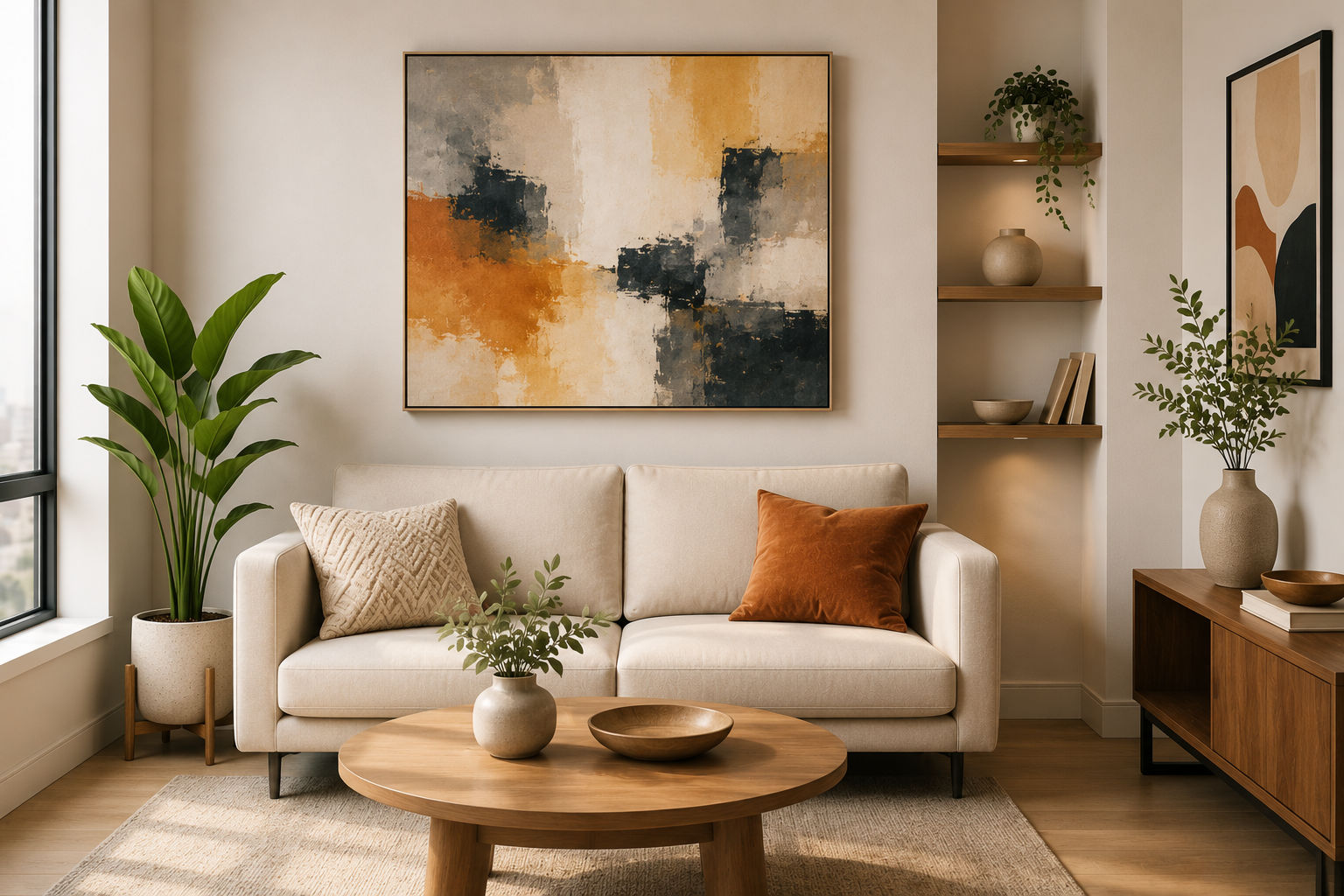
This is prime real estate in any living room, and especially powerful in small ones. The art anchors the sofa, creating a complete vignette that feels intentional.
Hang it: 15–20 cm above the sofa back. The bottom of the frame should never be more than 25 cm above the furniture.
The Entry Wall
The first wall you see when you walk in sets the entire tone of the apartment. A single, well-chosen painting here creates an immediate impression and establishes your home's visual personality.
Choose: Something with personal meaning or strong visual impact. This is where you make a statement.
The Bedroom — Above the Headboard
In small bedrooms, the wall above the bed is often the only significant wall space. One large painting here creates a calm, hotel-like feel.
Avoid: Busy, high-contrast artwork in the bedroom. Opt for soft, soothing compositions that support rest.
What to Avoid
· Hanging art too high — eye level is 145–152 cm from the floor for the centre of the piece
· Filling every wall in a small apartment — leave at least one wall completely bare
· Mismatched frames and sizes that create visual chaos.
5. Gallery Walls in Small Apartments — Yes or No?-
Gallery walls are popular, but in small apartments, they require careful execution.
When They Work
· In a dedicated hallway or corridor where the wall is the main visual element
· When all frames are the same colour/finish (creates unity)
· When the overall arrangement has a clear shape - a rectangle, a grid, or a symmetrical cluster
When They Don't
· When random sizes and styles are mixed without a unifying theme
· When the gallery wall competes with busy furniture arrangements
· In rooms smaller than 150 sq ft — the visual complexity can feel overwhelming
The safer alternative for small apartments: One large statement piece instead of a gallery. Cleaner, more impactful, easier to execute.
6. Art and Lighting — The Combination Most People Miss-
Even the most beautiful painting looks flat in poor lighting. In a small apartment, thoughtful art lighting highlights the work and adds warmth to the room.
Simple lighting strategies:
· Picture lights mounted on the frame work well for larger paintings
· Warm-white LED spotlights (3000K) angled at the painting from above create a gallery effect
· Natural light is ideal — position art near windows but not in direct sunlight, which causes fading
Avoid placing art opposite windows without light control — the glare will wash out the painting entirely.
7. Subject Matter That Works Best for Small Spaces-
What the painting depicts also matters. Interior designers often recommend these subjects for compact apartments:
· Landscapes and nature scenes- create a sense of depth and the outdoors.
· Abstract art- versatile, doesn't crowd the space visually.
· Minimalist compositions- simple subjects with generous negative space.
· Water and sky themes- psychologically open and calming.
For Indian apartments specifically, nature-inspired and Vastu-friendly art — flowing water, birds in flight, blooming flowers — works beautifully and aligns with the sense of positive energy many homeowners look for.
Final Thoughts
Decorating a small apartment with art isn't about buying more it's about choosing better. One thoughtful painting, properly sized and placed, does more for a compact space than ten pieces hung without intention.
Start with your living room. Choose one painting that speaks to you, that connects to your colour palette, and that's larger than feels safe. Hang it at eye level above your sofa. Step back.
That's where it begins.
Written by
Lovish Taneja is a Director at Canvas Groove. He joined his father Vijay Taneja's printing business in 2020 — a business that has been printing for brands like Fortune, Adani, Emami and Hindustan Unilever since 2000. Lovish learned the printing process on the shop floor in Mayapuri, New Delhi, alongside digital marketing, and now writes Canvas Groove's guides on canvas prints, wallpaper, fridge and door wraps and Vastu décor.
Read more about Canvas Groove or contact the team.
FAQS
Still have questions?
Contact Support